Introduction
Aluminum casting alloys such as A356 are widely used in industrial applications due to their favorable strength-to-weight ratio, corrosion resistance, and castability. However, improper processing—particularly inadequate heat treatment—can significantly compromise mechanical performance.
This blog presents a metallurgical failure analysis conducted on three aluminum samples submitted after premature fracture during a crimping operation. The failure occurred at applied pressures between 1,250 and 1,300 psi, raising concerns about material integrity, processing condition, and suitability for service.
Background of the Failure
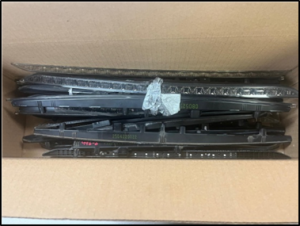
Three aluminum components supplied by K-LINE Co. were submitted for investigation after one component fractured during crimping. The objective of the analysis was to:
- Identify the alloy and verify material chemistry
- Evaluate microstructure and hardness
- Determine the fracture mechanism
- Establish the root cause of failure
The scope of work included chemical analysis, optical microscopy, microhardness testing, and DSC/TGA, supported by stereomicroscopic fracture examination.
Chemical Composition and Alloy Identification
Chemical analysis confirmed that the material is a hypoeutectic Al-Si casting alloy, with an average silicon content of approximately 7.0 wt.%, consistent with A356 aluminum.
Key observations:
- Silicon, magnesium, and iron levels fall within typical A356 ranges
- No abnormal alloying elements or contamination were detected
- Chemistry was consistent across multiple test attempts
Conclusion: The failure was not caused by incorrect alloy selection or chemical non-conformance.
Microhardness Results
Vickers microhardness testing (HV1) was performed at five locations on Sample 27/F/01.
- Average hardness: ~66 HV1
- Hardness distribution: Uniform across the tested area
For reference:
- Typical as-cast A356: ~55–75 HV
- Solution heat-treated and aged A356 (T6): ~95–110 HV
Interpretation:
The measured hardness confirms that the component was in an as-cast condition, with no evidence of solution heat treatment or artificial aging.
Microstructural Examination (Optical Microscopy)
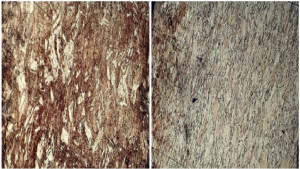
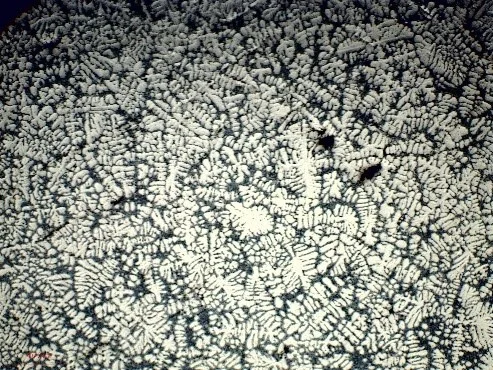
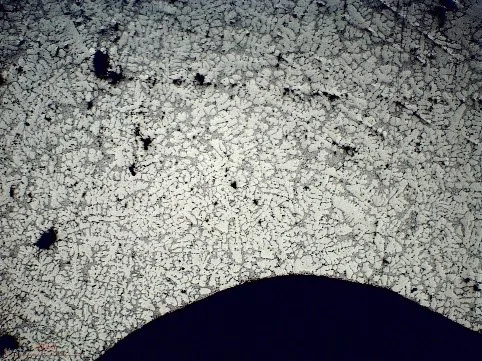
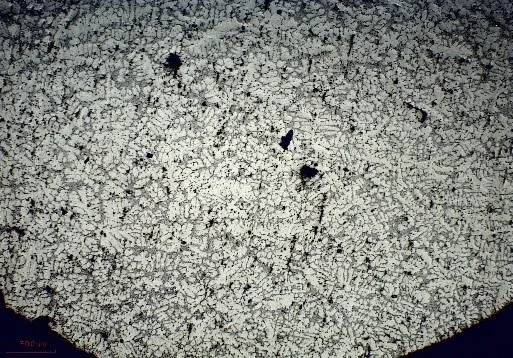
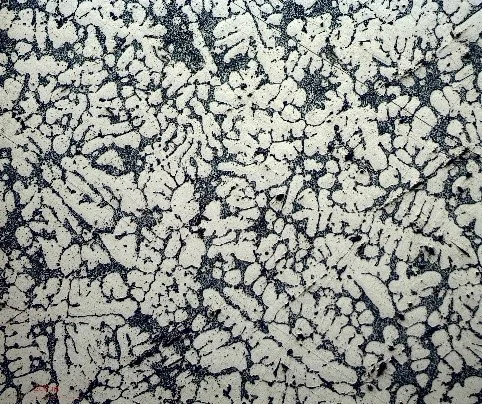
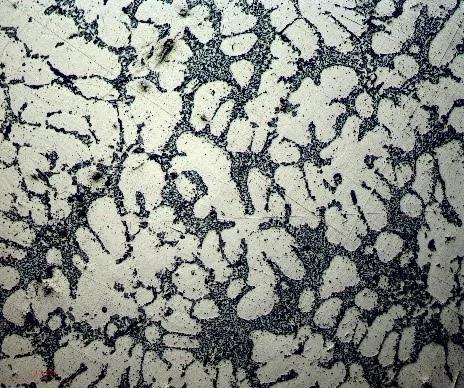
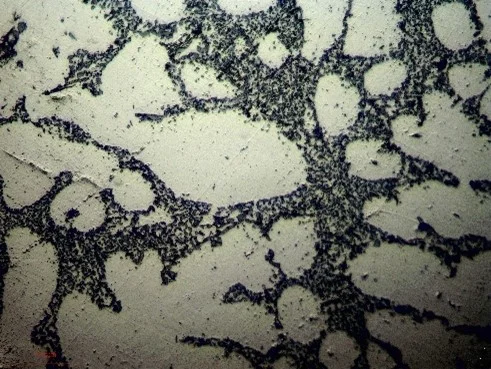
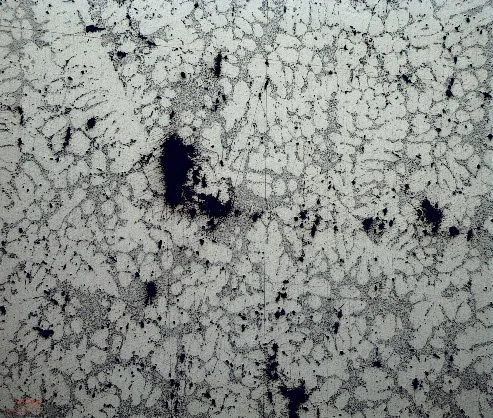
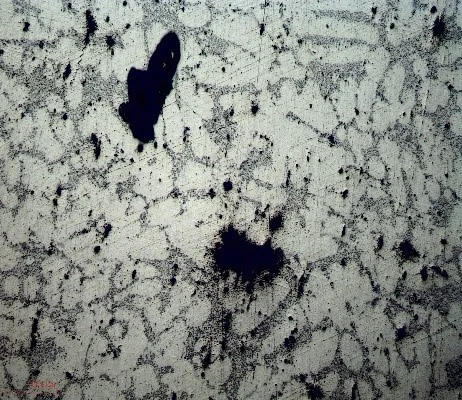
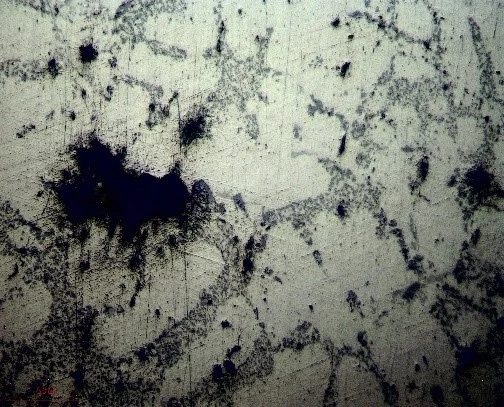
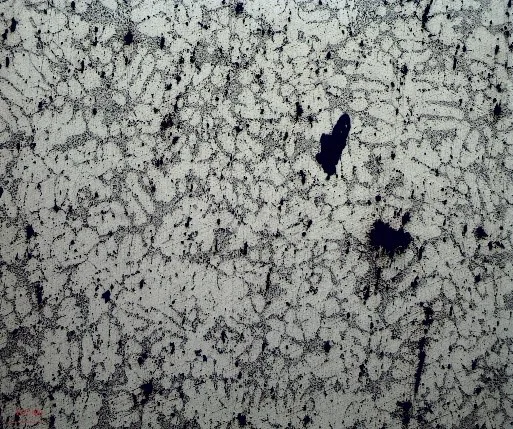
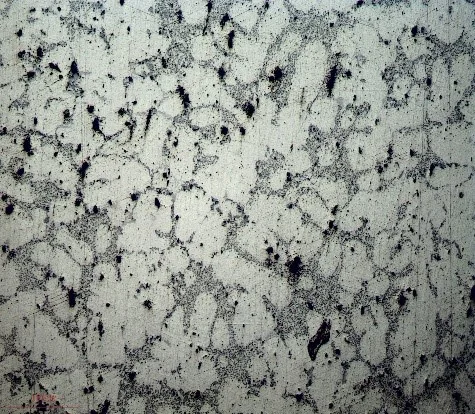
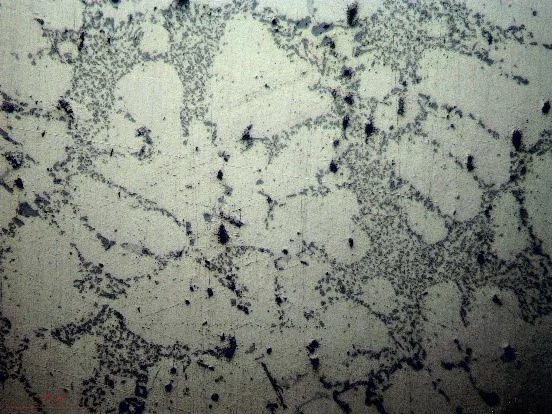
Optical microscopy revealed a coarse dendritic aluminum matrix with a continuous interdendritic eutectic silicon network—a hallmark of as-cast A356 aluminum.
This microstructure is typical of slow cooling rates during casting and is associated with:
- Reduced ductility
- Lower fracture toughness
- Increased susceptibility to brittle fracture
Fracture Surface Analysis (Stereo Microscopy)
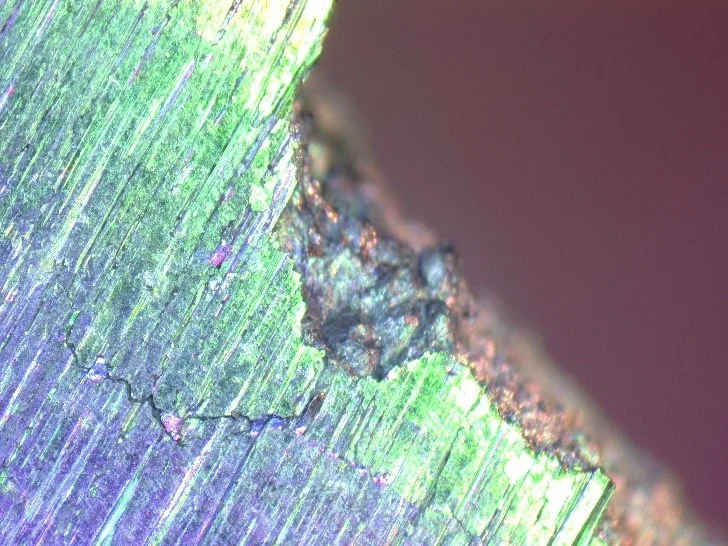
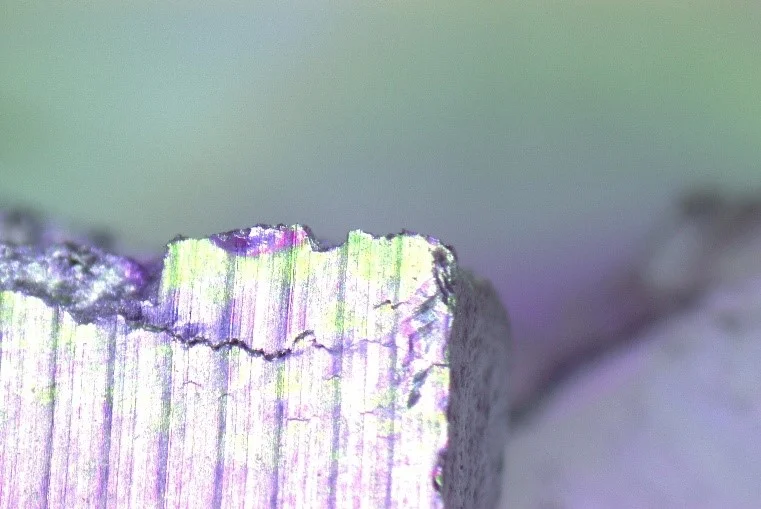
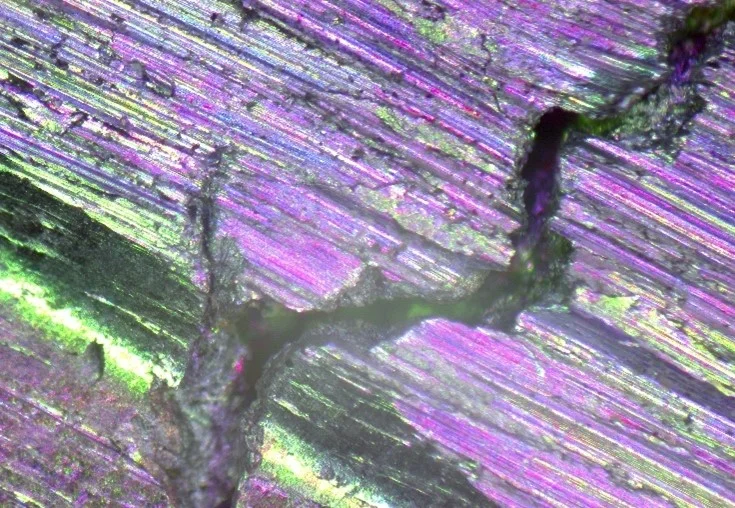
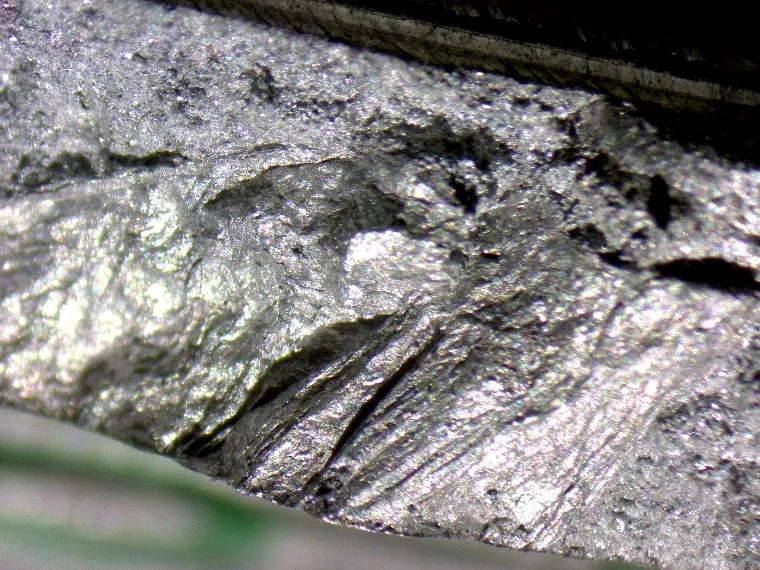
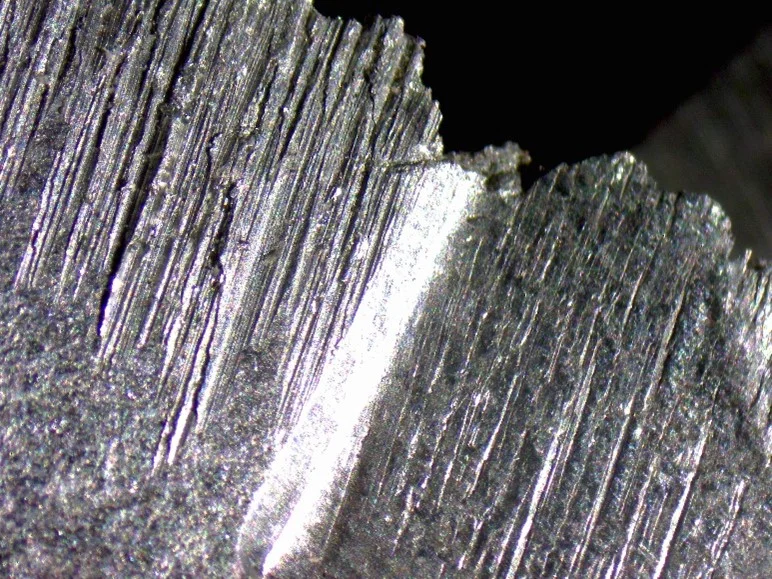
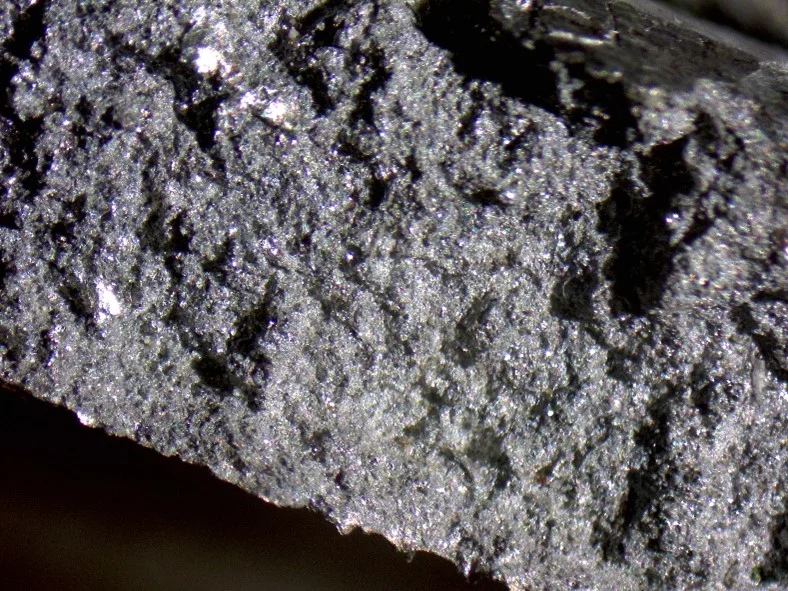
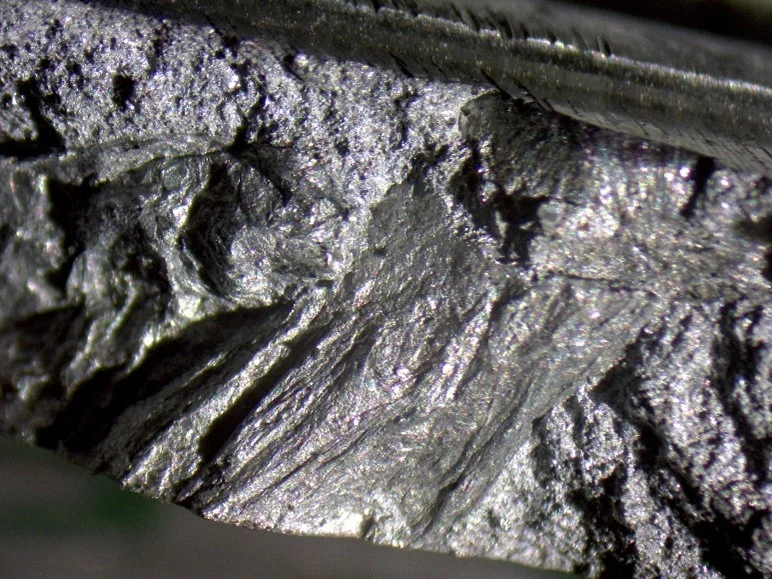
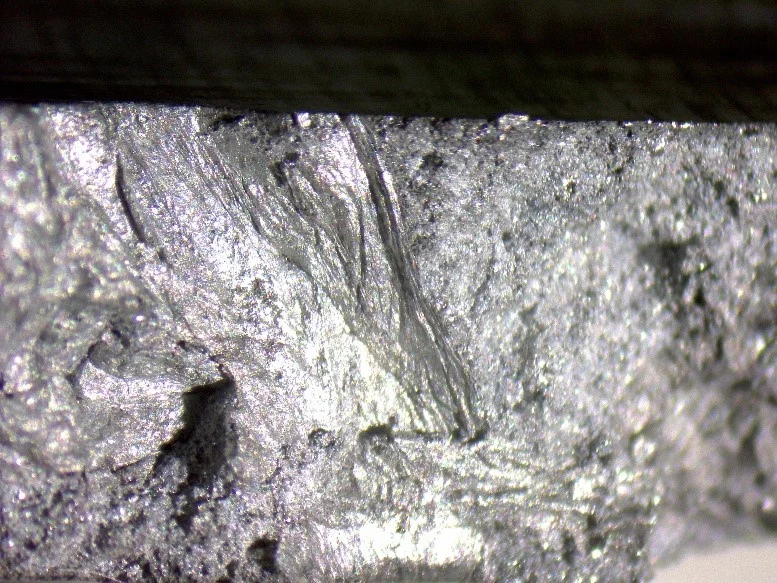
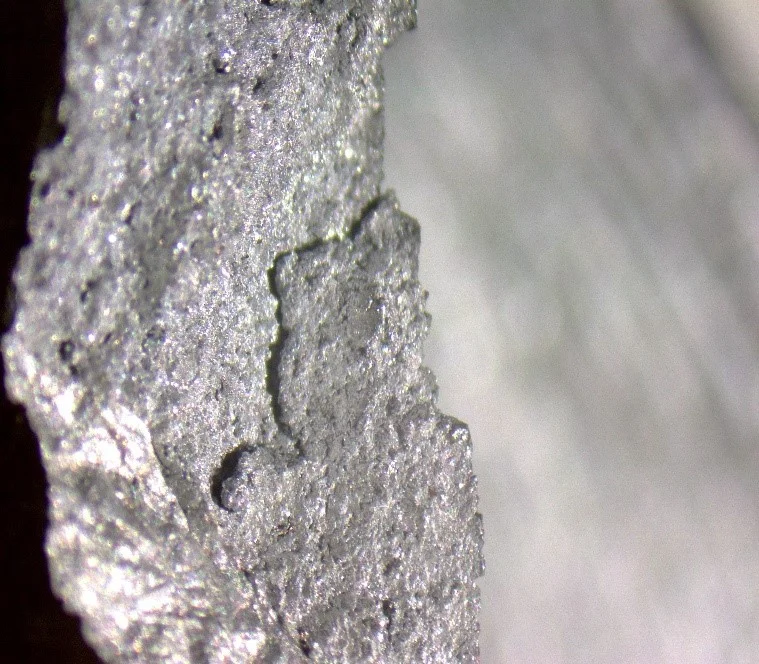
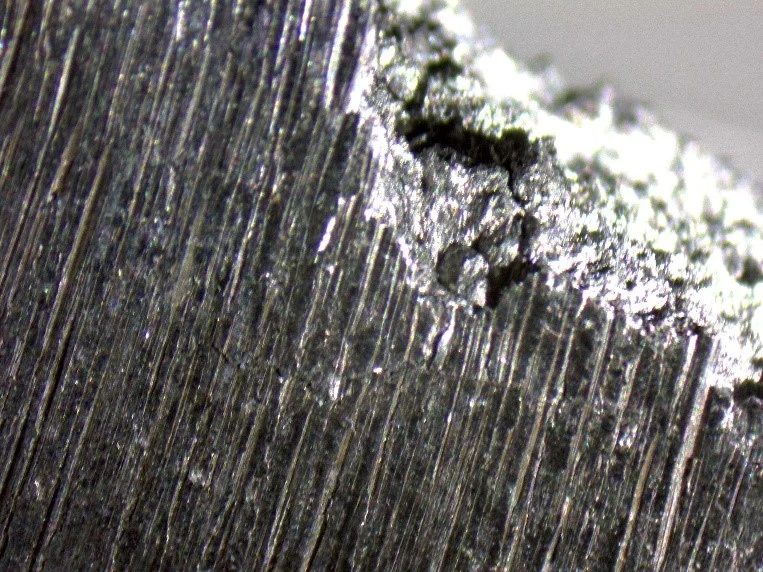
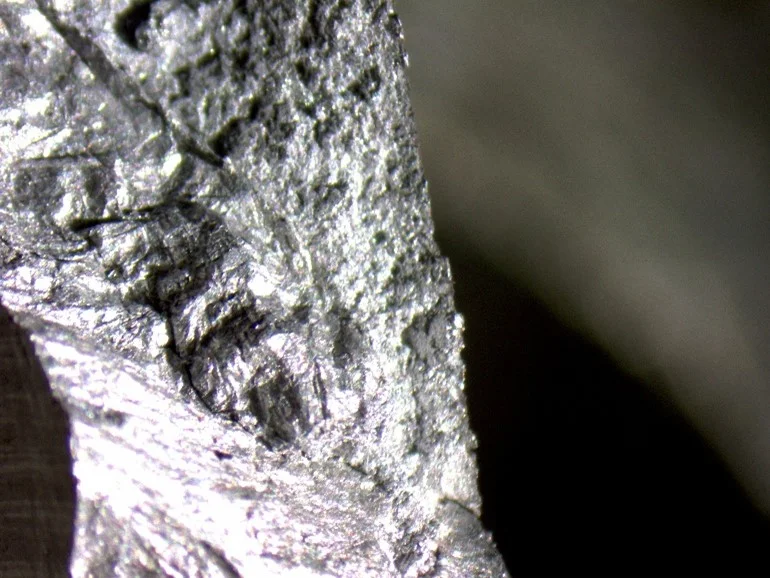
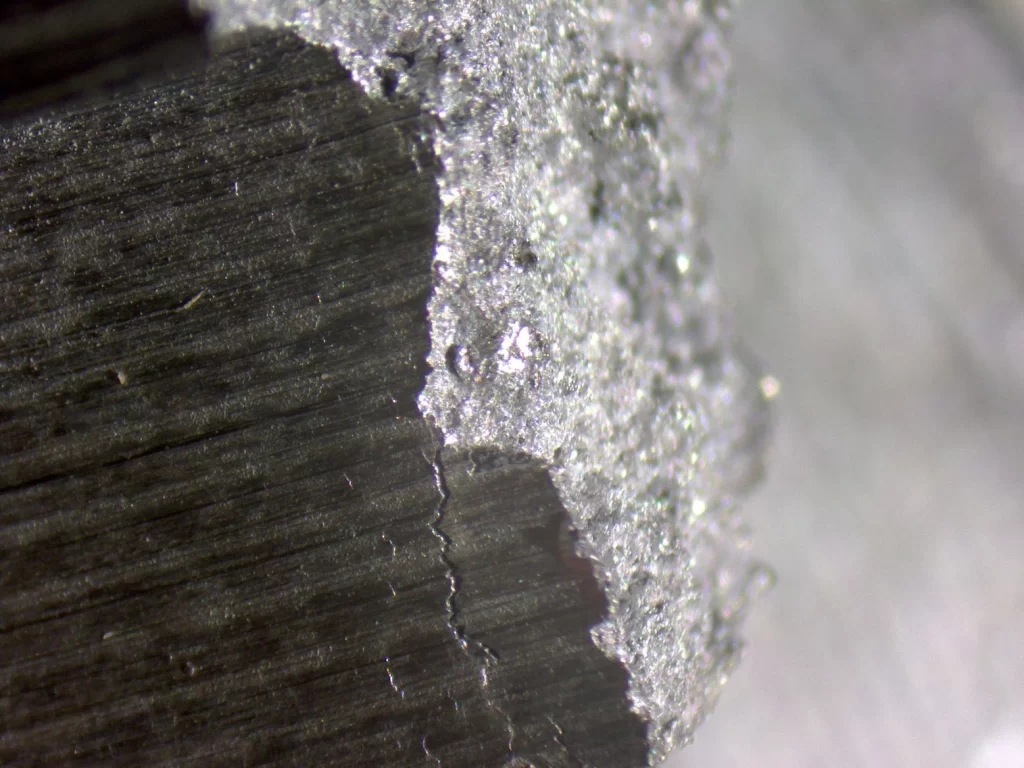
Stereo microscope examination of the fractured samples revealed classic brittle fracture characteristics, including:
- Cleavage-like, faceted fracture surfaces
- River patterns radiating from crack initiation sites
- Granular fracture morphology
- Minimal evidence of plastic deformation
Crack initiation was observed at localized stress concentration sites, likely associated with brittle interdendritic regions within the cast microstructure.
Figure 2: Stereoscope images of failed samples provided
Root Cause of Failure
Based on the combined metallurgical evidence, the failure mechanism is attributed to:
Brittle fracture initiated by localized stress concentration in an as-cast A356 microstructure
Contributing factors include:
- Lack of solution heat treatment and aging
- Coarse dendritic structure with continuous silicon networks
- Reduced ductility and fracture toughness
- High localized stresses imposed during crimping
Once initiated, cracks propagated rapidly through brittle interdendritic paths, resulting in sudden fracture under service loading.
Importantly, no major material defects or chemical non-conformities were identified.
Key Takeaways for Manufacturers
- As-cast A356 aluminum is not ideal for high localized deformation processes such as crimping
- Heat treatment (e.g., A356-T6) significantly improves ductility and fracture resistance
- Even when chemistry meets specification, processing condition governs performance
- Failure analysis is critical to distinguishing material flaws from process-related limitations
Conclusion
This failure analysis demonstrates how microstructure and heat treatment condition not alloy chemistry can govern component performance. The fractured aluminum component failed due to brittle behavior inherent to an untreated as-cast A356 alloy when subjected to high localized stresses during crimping.
Proper heat treatment and process control are essential to ensure reliable performance in mechanically demanding applications.